

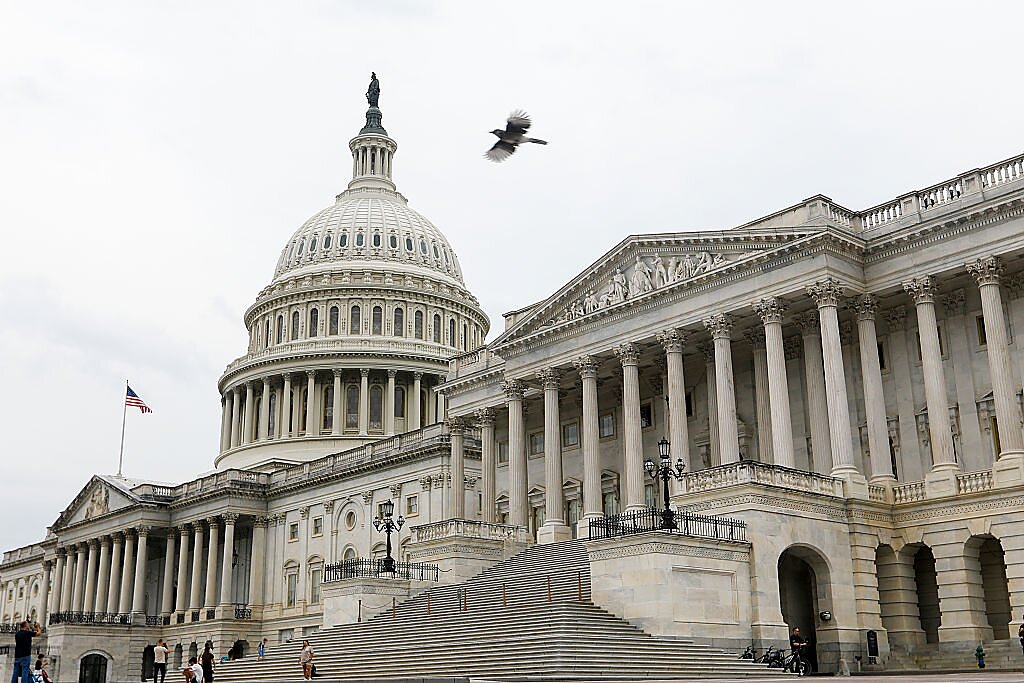
May 7 marks exactly one year since I testified before the US House Judiciary Subcommittee on Crime and Federal Government Surveillance. If I’m being honest, as a former US Senate Committee staffer, I walked into that hearing room with a healthy dose of cynicism.
Having staffed my fair share of congressional hearings, I’ve grown jaded. Too often, congressional hearings are little more than theater—stages for fundraising soundbites and partisan gamesmanship. We’ve seen oversight hearings where officials routinely refuse to answer basic questions, and we’ve watched judicial nominees dodge indisputable facts, like the presidential term limits set by the 22nd Amendment. We’ve even seen recent spectacles like Senator John Kennedy’s (R‑LA) attempt to malign my colleague David Bier—a move that, fortunately, backfired.
Even during my own testimony, the room wasn’t immune to the typical friction. I witnessed a less-than-diplomatic exchange between Congressman Dan Goldman (D‑NY) and fellow witness Jonathan Turley regarding Turley’s opposition to President Trump’s impeachment—a topic totally divorced from the purpose of the hearing. It felt, for a moment, like another day where vulnerable constituents were being sidelined for political points.
However, my experience took a turn toward the extraordinary. It proved that despite the noise, Cato’s influence on public policy remains a force for genuine change.
This didn’t happen by accident. It was a team effort, largely driven by the relentless work of Maria Sofia on our government affairs team. Maria’s ideologically diverse professional network and ability to foster relationships on Capitol Hill led Judiciary Committee Ranking Member Jamie Raskin (D‑MD) to invite me to testify as the minority witness. This opportunity offered a truly unique experience: substantive, respectful dialogues with Congressman Raskin, as well as with Committee Chairman Jim Jordan (R‑OH), Subcommittee Chairman Andy Biggs (R‑AZ), and Subcommittee Ranking Member Lucy McBath (D‑GA).
The hearing was titled “Criminalizing America: The Growth of Federal Offenses and Regulatory Overreach.” I chose to focus my testimony on the disturbing reality that with so many laws and regulations, it’s easy for good people to become ensnared in our criminal justice system through no fault of their own.
Drawing on my experience as a public defender, I knew that to have a meaningful impact, I had to make abstract concepts relatable. To drive this home, I shared the stories of real people caught in the gears of the federal machine:
- John Moore and Tanner Mansell: Two Florida seafarers whose good deed ensnared them in the wrath of the Justice Department.
- Michelino Sunseri: A champion mountain runner whose life was upended by federal bureaucrats seeking to make an example out of him.
I left that hearing feeling I had done my best to illustrate a system that has all but eviscerated the safeguards painstakingly designed to discourage ill-conceived prosecutions and prevent palpably unjust convictions. I hoped for the best, but I didn’t expect what followed.
Just two days after my testimony, the impact became undeniable. On May 9, 2025, President Trump issued an Executive Order titled “Fighting Overcriminalization in Federal Regulations” that felt like a direct response to the hearing. The order:
- Instructed federal agencies to identify regulatory crimes within their ambit.
- Discouraged the criminal enforcement of regulatory offenses—particularly those regulations lacking a clear mens rea (criminal intent) element.
The momentum didn’t stop there. Within three weeks, President Trump issued full unconditional pardons to John Moore and Tanner Mansell. That circle of justice was completed in November when Michelino Sunseri received his pardon.

While the acts of executive clemency provided immediate relief, things never should have gotten this far. Unfortunately, legislation that would inform jurors of their historic prerogative to prevent injustice and ban the government from curating the jury pool to ensure that those most aware of these historic powers are among the least likely to serve remains a pipe dream. However, the fight for permanent structural change has nonetheless moved into the halls of Congress.
The Count the Crimes to Cut Act—which would codify aspects of the president’s executive order—would compel federal agencies to identify regulatory offenses that carry criminal penalties within their respective jurisdictions. To repeal these unconstitutional regulations, we must first learn where in the federal code they reside. After passing the House, the legislation was reported out of the Senate Judiciary Committee and awaits action on the Senate floor.
Meanwhile, the Mens Rea Reform Act—which sets a default intent element to ensure no American is convicted of a federal crime unless the government can prove criminal intent—passed out of the House Judiciary Committee. It currently awaits attention on the House floor, and no companion bill has yet been introduced in the Senate.
Today, we’re seeing the direct results of principled arguments and human storytelling. One year later, we aren’t just talking about reform—we’re seeing the fruits of our labor. Following the pardons of John and Tanner, Cato’s President Peter Goettler stated that he’s “come to appreciate that our work doesn’t always score immediate wins for liberty.” Goettler explained that “sometimes it’s the constancy and consistency of our efforts that move the climate of ideas a bit more each day in the direction of individual liberty [and] limited government. And only after years of effort are the results clear.” But this “was one of those great moments [where we] scored tangible and immediate victories that showcased [our] dedication and effectiveness.”
Last January, I hosted a policy forum with John, Tanner, and Tanner’s mom, Jodi, at Cato. In my introduction, I noted that our paths never should have crossed. They lead shark-diving charters off the coast of South Florida, and I wouldn’t dare enter shark-infested waters. Nonetheless, this experience underscores Cato’s unwavering commitment to constitutionally limited government and showcases our willingness to partner with anyone who shares the goal of making that vision a reality.